Let's Shape The Future Of Your Investments!
Natoque iaculis cursus augue urna commodo aptent morbi tortor porttitor quis ornare.
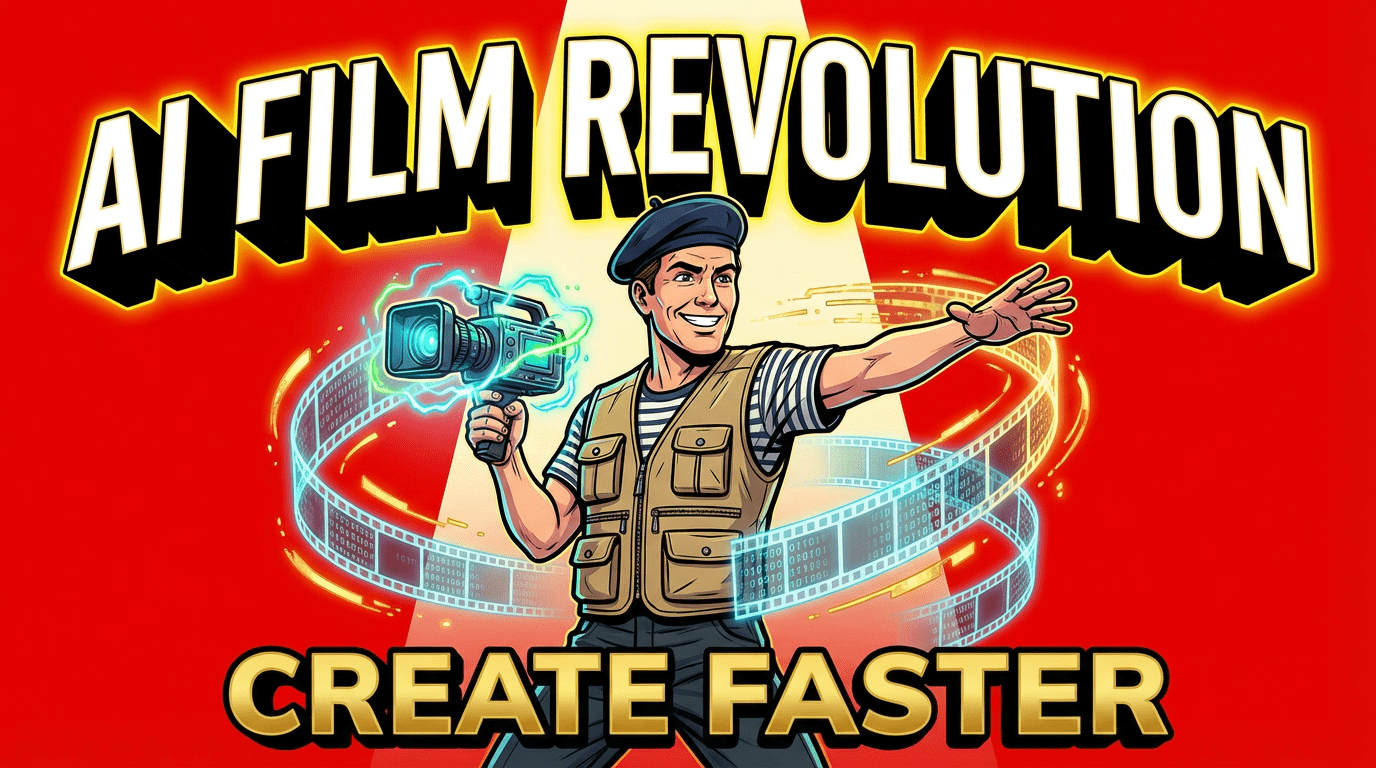
When I watch how AI in film production is evolving, I don’t just see tools. I see new kinds of light, new ways to move a camera, and new emotional spaces opening up for creators who never had a full crew.
If you’re a filmmaker, YouTuber, TikToker, or visual storyteller, you’ve probably felt this shift already. Editing feels faster. Backgrounds appear with a few words. Faces can be cleaned up in one slider. And yet, the real question isn’t, “What can AI do?” It’s, “Can it help my work feel more cinematic, more emotionally honest, and still look like me?”
In this text, I’ll walk you through how AI is changing film production from an aesthetic point of view, how it touches light, motion, texture, and story, so you can decide how to use it without losing your voice.
AI in film production isn’t a sudden revolution: it’s a quiet layering. Little moments: a cleaner key, a smoother cut, a steadier frame. You start using it for something small, and before you notice, it’s in almost every stage of your workflow.
What I find most striking is how AI is shifting who gets to create cinematic images. A single person with a laptop can now touch tools that used to belong only to large productions. The gap between a bedroom creator and a studio is still real, but the visual distance is shrinking.
On a practical, visual level, AI in film production usually shows up in small, almost invisible assists:
When it’s used well, the light feels natural, the textures feel honest, and you don’t notice the tool. You just feel that the frame is quieter, cleaner, and more emotionally readable.
When it’s used carelessly, you start to see it: plastic skin, eyes that hesitate, hair that flickers, and a background that seems to breathe in a way that doesn’t feel natural.
Filmmakers, YouTubers, and short-form creators are embracing AI now because three pressures are colliding at once:
Underneath all of this is something more emotional: a desire to focus on the feeling of a scene rather than the mechanics of making it look acceptable.
AI can touch almost every stage of the process, but it doesn’t have to. You can invite it in gently, where it supports your eye instead of replacing it.
In pre-production, AI acts like a patient visual assistant:
Here, the main value is emotional clarity. You’re not locking final images: you’re auditioning atmospheres.
On set and in post, AI becomes more technical in what it does, but the results are still emotional in how they feel:
For solo creators, this means you don’t have to choose between “fast” and “beautiful” as sharply as before. You can move quickly and still aim for images that breathe.
AI in film production appears most clearly in visual effects, environments, and finishing. These are the areas where the images either suddenly open up, or quietly fall apart.
This is where things can feel almost magical, but also fragile.
AI-enhanced tools can:
When done well, the light on your subject and the light in the background speak the same emotional language. Shadows fall in the right direction. Colors share the same temperature. The world feels like one continuous breath.
When done poorly, you see it immediately: the subject feels cut out, the background is too sharp or too soft, perspective bends slightly, or the air between foreground and background feels missing.
The secret is to use AI-generated environments as supporting actors, not the star. Let them frame your character’s emotion: don’t let them shout over it. Understanding visual effects principles and post-production workflows helps you make better creative decisions when working with AI-generated environments.
In editing and finishing, AI works best when it’s almost invisible:
I pay close attention here to whether the tool respects subtlety. Sometimes, it tries hard but lacks emotional nuance, voices become too sharp, skin too smooth, colors too loud. When that happens, I pull it back and use AI only as a starting point, not the final word.
The real beauty of AI in film production is not just speed. It’s the way it removes certain fears so you can take more visual and emotional risks.
When I’m exploring ideas, AI lets me:
Because the cost of trying is lower, you can wander more. You can follow a fragile idea without worrying that every experiment will drain your time and budget.
For many creators, the biggest shift is financial. AI can:
The risk, of course, is to lean too heavily on the tool and accept a look that feels generic. Lower cost shouldn’t mean lower personality. The goal is to save money and time so you can invest more energy in performances, writing, and the emotional precision of each frame.
AI in film production is not here to replace the way you see. It’s here to respond to it, to shape, clean, and extend what your eye already loves.
I see the biggest benefits for:
If you’re willing to guide the tool gently, and not let it steer your taste, it can become a quiet partner.
Looking ahead, I expect AI to become more emotionally aware in small ways, better at respecting subtle expressions, preserving natural skin texture, and keeping motion stable without feeling stiff.
As a filmmaker or creator, the best way to prepare is not to chase every new feature, but to:
Understanding color grading fundamentals and cinematography techniques will help you make better decisions when using AI tools. The best AI filmmaking tools continue to evolve, but your creative vision should always guide their use.
If you stay close to your own visual instincts, AI will remain what it should be: a flexible assistant that frees your time, lowers your barriers, and quietly supports the most important thing, the emotional truth inside your images.